What is Through Hole Technology PCB?
Through‑Hole Technology (THT) PCBs use components with leads that pass through drilled holes in the circuit board and are soldered on the opposite side. While surface‑mount technology dominates high‑density electronics today, THT remains essential for applications where strength, durability, and long‑term reliability are non‑negotiable.
THT components form exceptionally strong mechanical bonds, making them ideal for products exposed to vibration, shock, heat, or high current. Power supplies, industrial controls, aerospace systems, automotive electronics, transformers, connectors, and mission‑critical assemblies all rely on through‑hole construction to ensure stable performance in harsh environments.
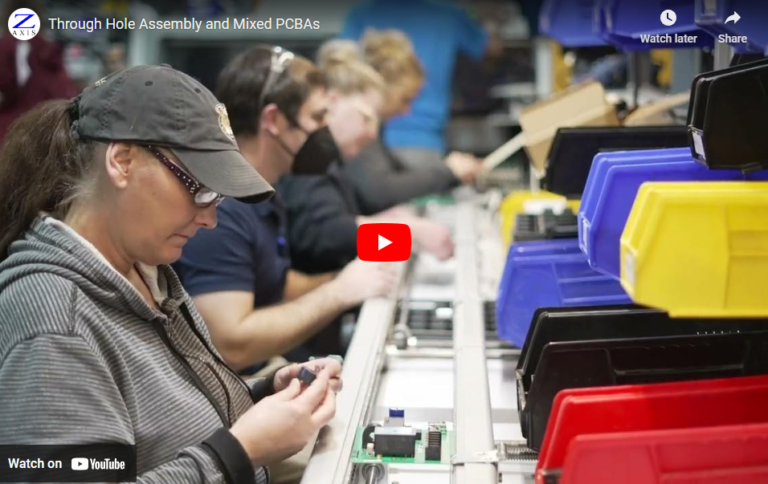
A THT PCB assembly process typically includes automated or manual insertion, wave soldering, selective soldering, and inspection. This approach supports larger components, high‑power devices, and connectors that require robust anchoring to the board. THT also simplifies prototyping and field repair, since components are easier to handle and replace.
For OEMs, Through‑Hole Technology offers a proven, dependable solution when mechanical strength matters more than miniaturization. Whether used alone or in combination with SMT in a mixed‑technology assembly, THT continues to play a vital role in building rugged, long‑life electronic products.
FAQs: Through‑Hole Technology (THT) PCB Assembly
What is Through Hole Technology PCB?
Through‑Hole Technology is a PCB assembly method where component leads are inserted into drilled holes and soldered on the opposite side of the board, creating strong mechanical and electrical connections.
Why is THT still used when SMT is more common?
THT offers superior mechanical strength, higher current‑carrying capability, and better durability under vibration, shock, and thermal stress—making it essential for rugged or high‑power applications.
What types of components use through hole technology PCB?
Common THT components include connectors, transformers, large capacitors, inductors, relays, switches, power semiconductors, and any part requiring strong anchoring to the PCB.
Which industries rely on THT assembly?
THT is widely used in industrial controls, automotive electronics, aerospace, defense, power supplies, transportation systems, and heavy‑duty equipment.
What are the advantages of THT assembly?
Key benefits include mechanical robustness, easier prototyping, reliable field repair, high power handling, and long‑term durability in harsh environments.
What soldering methods are used for THT PCBs?
THT assemblies typically use wave soldering, selective soldering, or hand soldering depending on volume, component density, and thermal requirements.
Can THT and SMT be used on the same board?
Yes. Many modern PCBs use mixed‑technology assembly, combining SMT for compact circuitry and THT for high‑strength or high‑power components.
Are THT boards easier to repair?
Generally yes. THT components are larger and easier to desolder and replace, making them ideal for serviceable or field‑maintained products.
Does THT affect PCB cost?
THT can increase labor and processing time compared to SMT, but it often reduces long‑term costs by improving reliability in demanding environments.
When should I choose THT over SMT?
Choose THT when your design requires mechanical strength, high current, thermal stability, or rugged performance—especially in mission‑critical or high‑stress applications.